The Timeless Appeal of Spot-the-Difference Games
Spot-the-difference puzzles have appeared in newspapers and magazines for well over a century, and their appeal has not diminished with the digital age — if anything, the browser format has made them better. High-resolution images, zoom capabilities, satisfying click-to-mark interactions, and unlimited puzzle variety have elevated a simple concept into a genre with genuine staying power.
The cognitive appeal is real. Finding differences between two nearly identical images requires a specific kind of focused visual scanning that is genuinely good exercise for your attention. Research consistently shows that activities requiring sustained visual attention improve focus, and spot-the-difference games provide exactly that in a form that does not feel like work.
Find the Difference: Classic and Contemporary Variations
Find A Difference represents the genre at its most accessible. The images are clear, the differences are detectable without a magnifying glass, and the hint system is generous enough to prevent frustration without making the game feel trivial. This is an excellent starting point for players new to the genre and a reliable choice for a relaxed session.
Find the Difference Best steps up the challenge considerably. The image pairs are more complex, the differences more subtle, and the time pressure (where present) more demanding. Players who have outgrown easier versions will find this the right difficulty level to keep their skills developing.
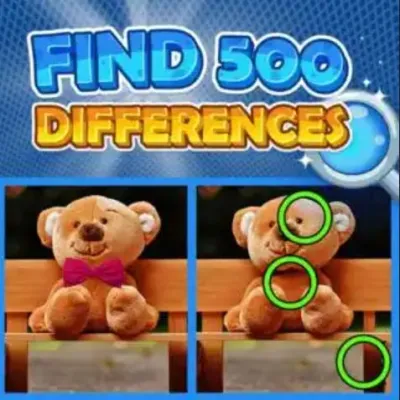
Find 500 Difference takes a marathon approach to the genre. Rather than brief individual puzzles, it presents extended challenges with dozens of differences to locate across rich, detailed scenes. This is the version for players who want to settle in for a longer session and work through something genuinely substantial.
Why Detail Matters: What Makes a Great Difference Puzzle
The best spot-the-difference images share a few key qualities. First, the subject matter should be genuinely interesting — detailed illustrations, rich environments, and complex compositions reward careful examination in a way that simple flat images do not. The visual journey of searching a well-crafted scene is enjoyable even before you find any differences.
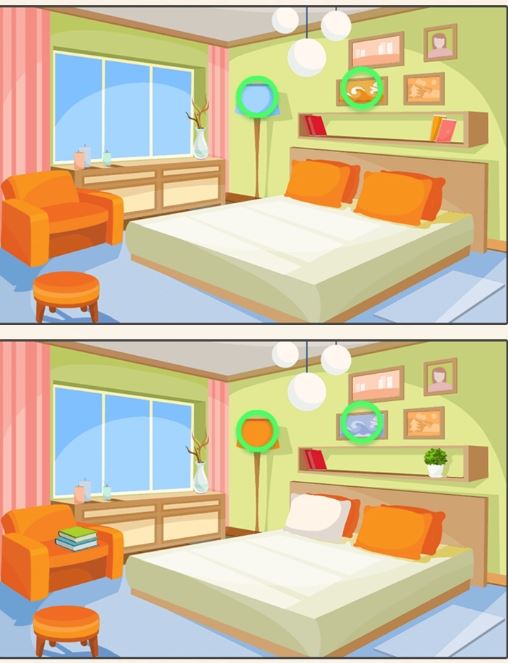
Second, the differences should be varied in type and difficulty. Easy-to-find differences (an obviously missing object) and subtle ones (a slightly different pattern on a carpet) should both appear in the same puzzle. This variety keeps the experience from becoming either too easy or too frustrating.
Third, the placement of differences matters. Well-designed puzzles distribute them across the entire image, requiring you to scan all areas rather than concentrating on obvious regions. Finding all differences in a corner-heavy puzzle is anticlimactic. Finding the final difference hidden in a complex background detail is genuinely satisfying.
Strategies for Finding Differences Faster
The most effective approach is systematic scanning rather than random searching. Divide each image into a grid in your mind and work through each section methodically, comparing left and right (or top and bottom, depending on image layout) before moving to the next zone. Random searching tends to revisit the same obvious areas repeatedly while missing subtle differences in overlooked corners.
Color is often the fastest signal. Many differences involve color changes — a red object becoming blue, a lighter area becoming darker. Scan for color anomalies first before looking for shape and size differences, which require more careful examination.
When you are stuck with one or two differences remaining, focus on the areas you have given least attention. If you have examined the main subjects carefully, the remaining differences are almost certainly in the background, edges, or decorative elements you initially dismissed as unimportant.
Spot-the-Difference as a Mindfulness Practice
There is something genuinely meditative about spot-the-difference games when approached without time pressure. The focused attention they require pulls you out of background mental chatter and into the present moment in a way that feels similar to other mindfulness practices — but without the effortful quality that makes formal meditation difficult for many people.
Differences Fun and Spot the Differences both offer this unhurried experience. No timer, no penalty for taking your time, just the quiet satisfaction of careful observation and the small reward of marking each difference as found. For a break that genuinely refreshes rather than just distracts, these games are hard to beat.