The Timeless Appeal of Logic Puzzles
Logic puzzles occupy a special place in the world of gaming. Unlike games that rely on reflexes or luck, a logic puzzle is a pure test of reasoning. Every solution can be deduced from the information in front of you, which means that solving one is deeply satisfying in a way few other experiences match. There is no randomness to blame and no twitch skill required, just you and the problem.
Sudoku is the undisputed king of the genre, but the logic puzzle family is far richer than most people realize. From number placement to region partitioning to path-finding, these games share a common DNA: a set of rules, a starting state, and exactly one correct solution waiting to be uncovered through careful thinking.
Sudoku: The Gold Standard
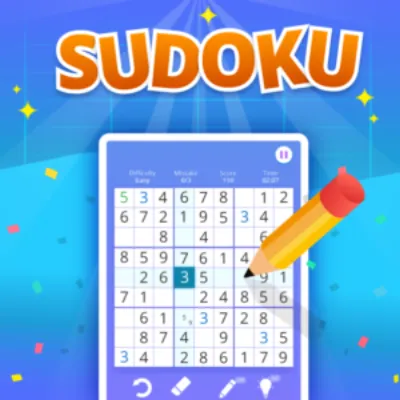
Sudoku needs little introduction. Fill a nine-by-nine grid so every row, column, and three-by-three box contains the digits one through nine exactly once. The rules take ten seconds to learn and a lifetime to master, with difficulty ranging from gentle introductions to fiendish puzzles that demand advanced techniques.
The foundational solving technique is scanning: look at each number from one to nine and find where it must go in each region by eliminating rows and columns where it already appears. Once scanning stops yielding progress, move to pencil-marking, where you note every possible candidate in each empty cell and use logical deductions to eliminate possibilities until only one remains.
Shikaku: Logic Through Geometry
Shikaku is a brilliant Japanese logic puzzle that deserves far more attention than it gets. You divide a grid into rectangles, where each rectangle contains exactly one number and that number equals the rectangle's area. It sounds simple, but the deductive chains required to solve larger grids are genuinely demanding. If you love Sudoku's pure logic but want something visually different, Shikaku is a revelation.
Number Maze and Bridges: Path-Based Logic
Number Maze challenges you to navigate through a grid following numerical rules, combining spatial reasoning with arithmetic. Bridges tasks you with connecting islands using a specific number of bridges according to logical constraints. Both games exercise a different kind of logical thinking than Sudoku, focusing on connections and pathways rather than placement.
Blocks8: Spatial Logic Made Addictive
Blocks8 blends logical thinking with spatial puzzle-solving, asking you to place blocks strategically to clear lines and maximize your score. It is the kind of game that starts as a casual diversion and gradually reveals surprising depth as you learn to think several placements ahead.
How Logic Games Sharpen Your Mind
Research has consistently shown that engaging with logic puzzles helps maintain cognitive sharpness. The deductive reasoning involved exercises the prefrontal cortex, and the focused attention required builds concentration over time. Many people use a daily Sudoku as a kind of mental warm-up, the cognitive equivalent of stretching before exercise.
The best part is that this benefit comes without any sense of obligation. You play logic games because they are genuinely enjoyable, and the mental benefits arrive as a pleasant side effect. Start with easier puzzles to build confidence, then gradually increase the difficulty as your solving techniques sharpen.